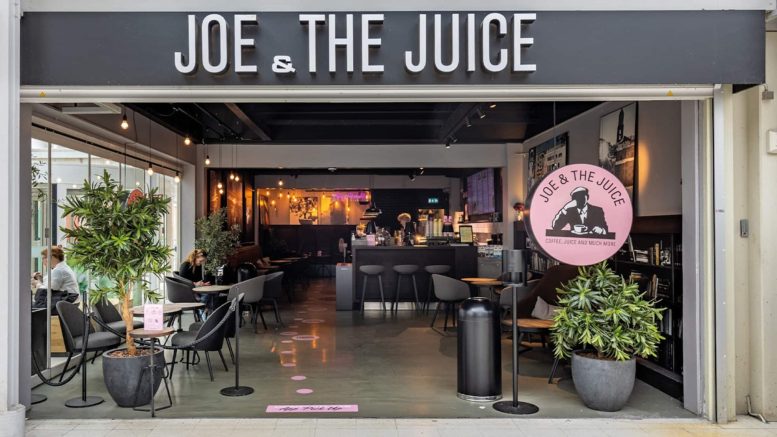
An international café chain is moving closer to opening at one of York’s most prominent city centre corners.
Fresh plans have been submitted for 1–2 St Sampson’s Square and 1 Feasegate, a historic Grade II listed building that was previously home to the footwear retailer Size?.
Danish brand Joe & The Juice has applied for listed building consent with City of York Council to pave the way for its new café. This follows initial approval in late October for interior fit-out and external changes to transform the former clothing store into a café bar.
The announcement sparked weeks of speculation about Size?’s future before staff were informed the trainer shop would close in mid-September.
The latest application seeks permission to remove a modern internal stud wall on the first floor. According to planning documents, this will create a more open and functional seating area upstairs. Earlier plans showed seating for up to 65 customers over two floors, with 29 covers on the ground floor and 36 above. The proposal also includes installing lighting above the approved fascia signs to brighten the storefront at night.
A heritage statement confirms the plans will protect the historic character of the 18th-century townhouses. Since the wall due to be removed is a modern addition from previous retail refits, its demolition will not affect the original building fabric. The documents highlight that securing long-term use of a vacant or underused listed building is a significant public benefit.
Joe & The Juice was founded in Copenhagen in 2002 and now operates over 500 locations worldwide, including Europe, the US, Asia, and the Middle East. Known for its energetic atmosphere, fresh juices, health shakes, specialty coffee, and toasted flatbread sandwiches, the café chain already has multiple sites across London, Manchester, Liverpool, and Birmingham. The York venue will be its first in the Yorkshire region.
Before Size? arrived in 2018, the well-known double-fronted unit was home to Cloggs and Barratts shoe shops. The location has a rich commercial history spanning nearly 200 years, formerly housing tailors, hatters, grocers in the 1800s, and the Stylo Boot Company during the 1950s.